
APM
Abnormal Polymer Mass - aka 'Calamari Clots'

This post will be an investigation into what I term Abnormal Polymer Mass - more commonly known as the calamari clots, or white rubbery structures associated with embalmers and the vascular system; often associated with ‘sudden death’ syndrome.
I do not like to use the term ‘clot’ for these structures; as we will see, they really do not resemble blood clots.
As unbelievable as it may seem, they are in fact a sort of living material, comprised primarily of synthetic biology (CDB) and associated proteins/metabolic products (I have also seen the term “Engineered Living Material” used to describe the APM).
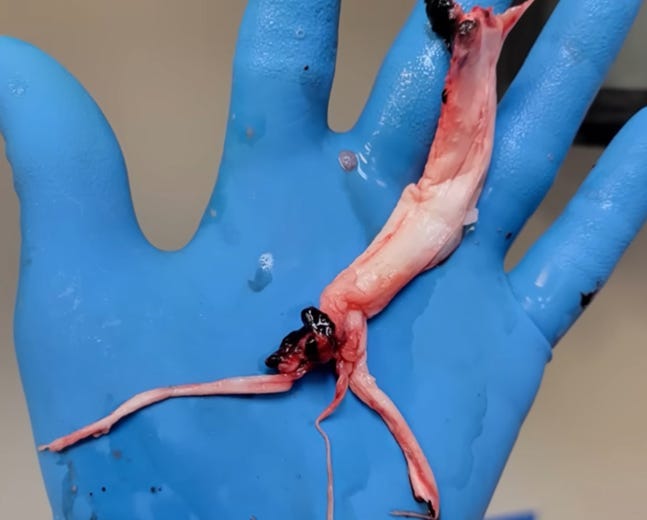
Many may know that these are associated with dead people and embalmers, and are probably familiar with dramatic images like this one:
I suspect far fewer are aware that this same material can be extracted via venipuncture and centrifugation from living individuals, seemingly irrespective of ‘vaccination’ status:
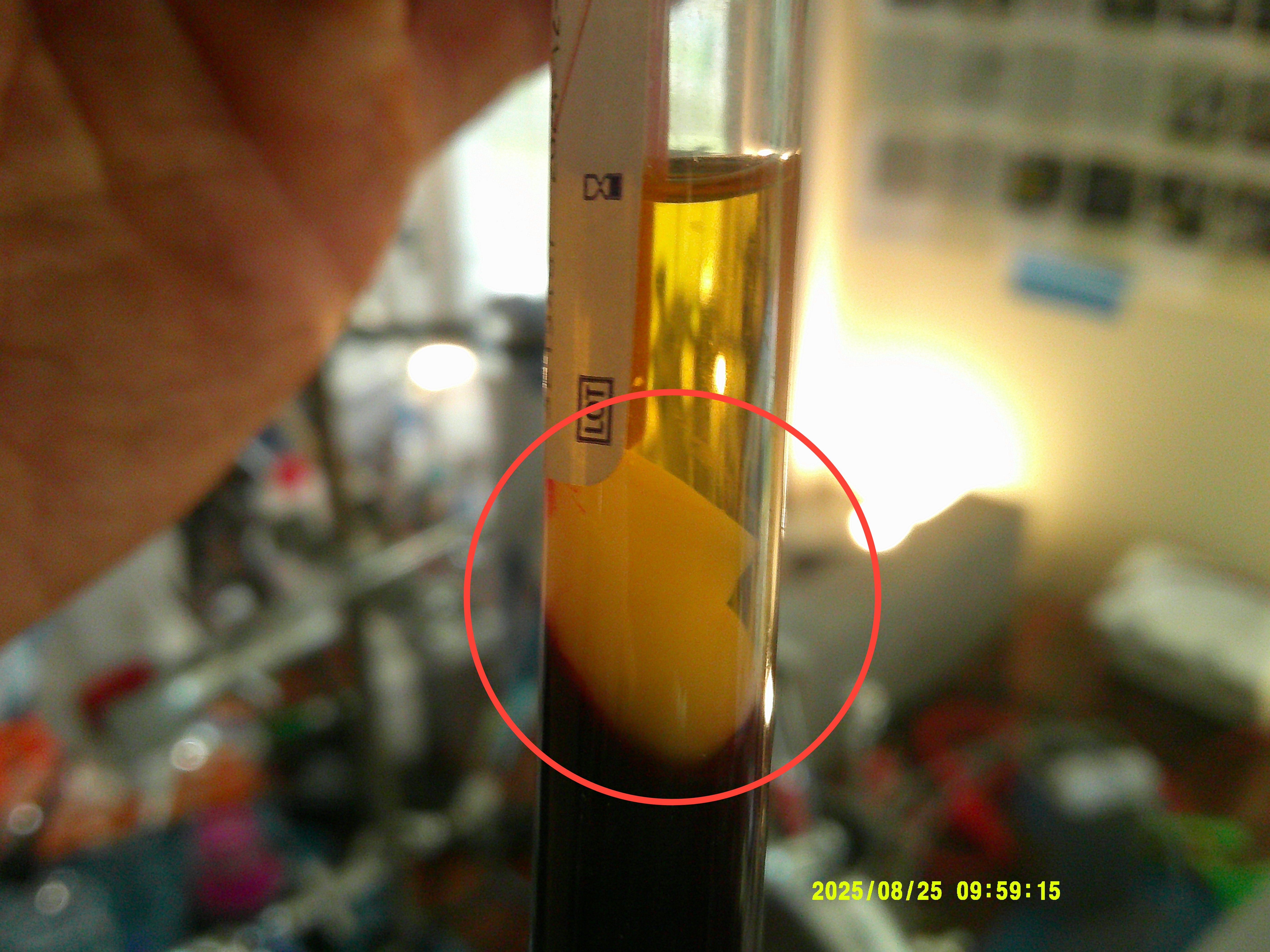
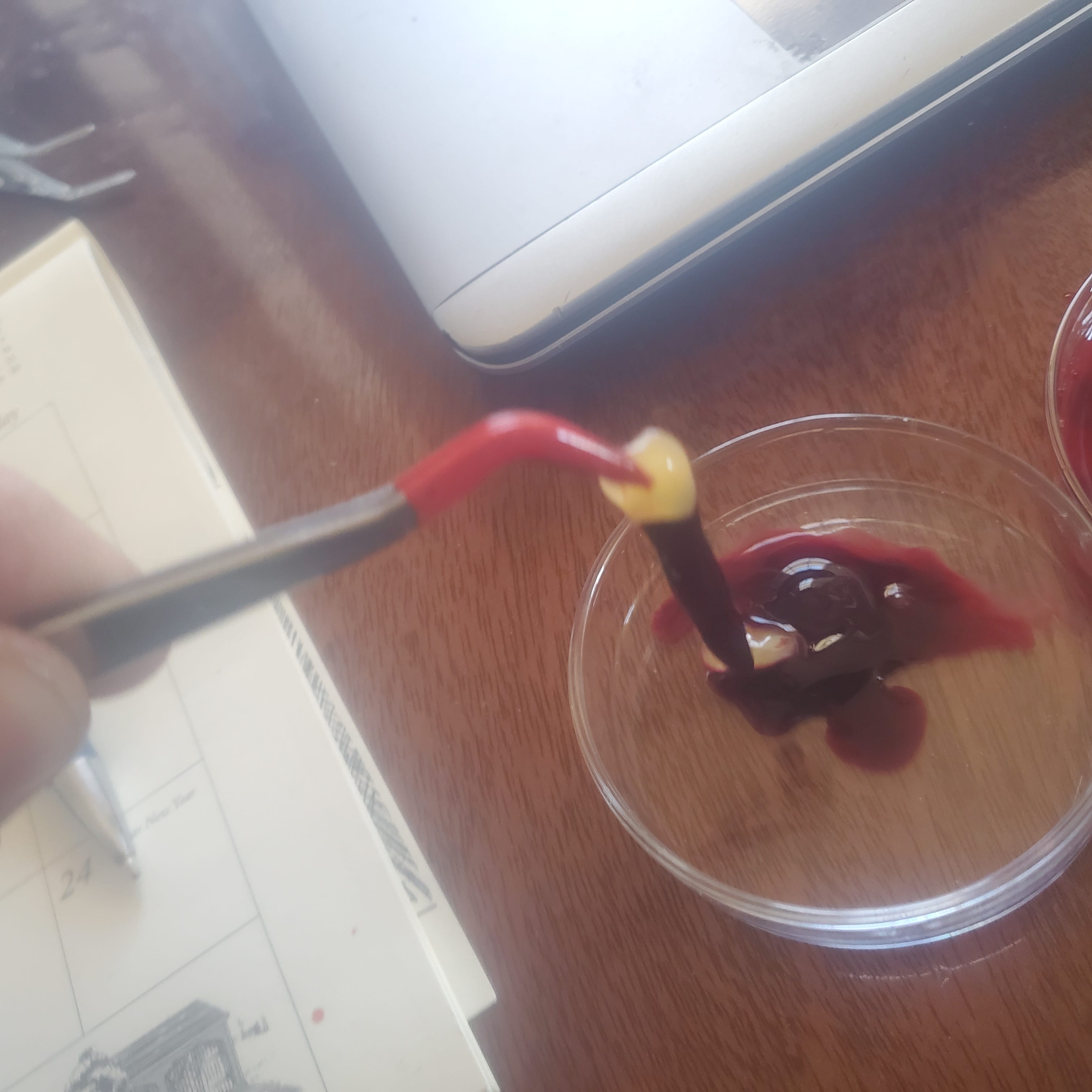
I have been removing and examining these masses for many months. I have settled upon a method of extraction that I wish to share with anyone interested.
I will note here that this method is very likely modifiable, has only been used on myself (I have extracted this material many times using different methods), and is not based on any specific nor rigorous scientific backing. It works, demonstrably and repeatedly, and is an excellent way to retrieve this material as needed for experimenting and examination.
I also wish to give credit to Ronald Norris, who did significant work on the extraction process and forms the basis of what I present in this article.
We will then look at the APM under the microscope, and I will note some further unusual properties.
Extraction Methodology
The process involves drawing of blood via venipuncture into a vacutainer tube, immediately centrifuging it, allowing it to sit, and then centrifuging again at a higher rpm.
Venipuncture
A 6mL red top vacutainer tube is used. It has a minor clot activator in it. This is the only type of tube I have ever used and I am unsure if there are differences in APM retrieval with different types; I suspect there is.
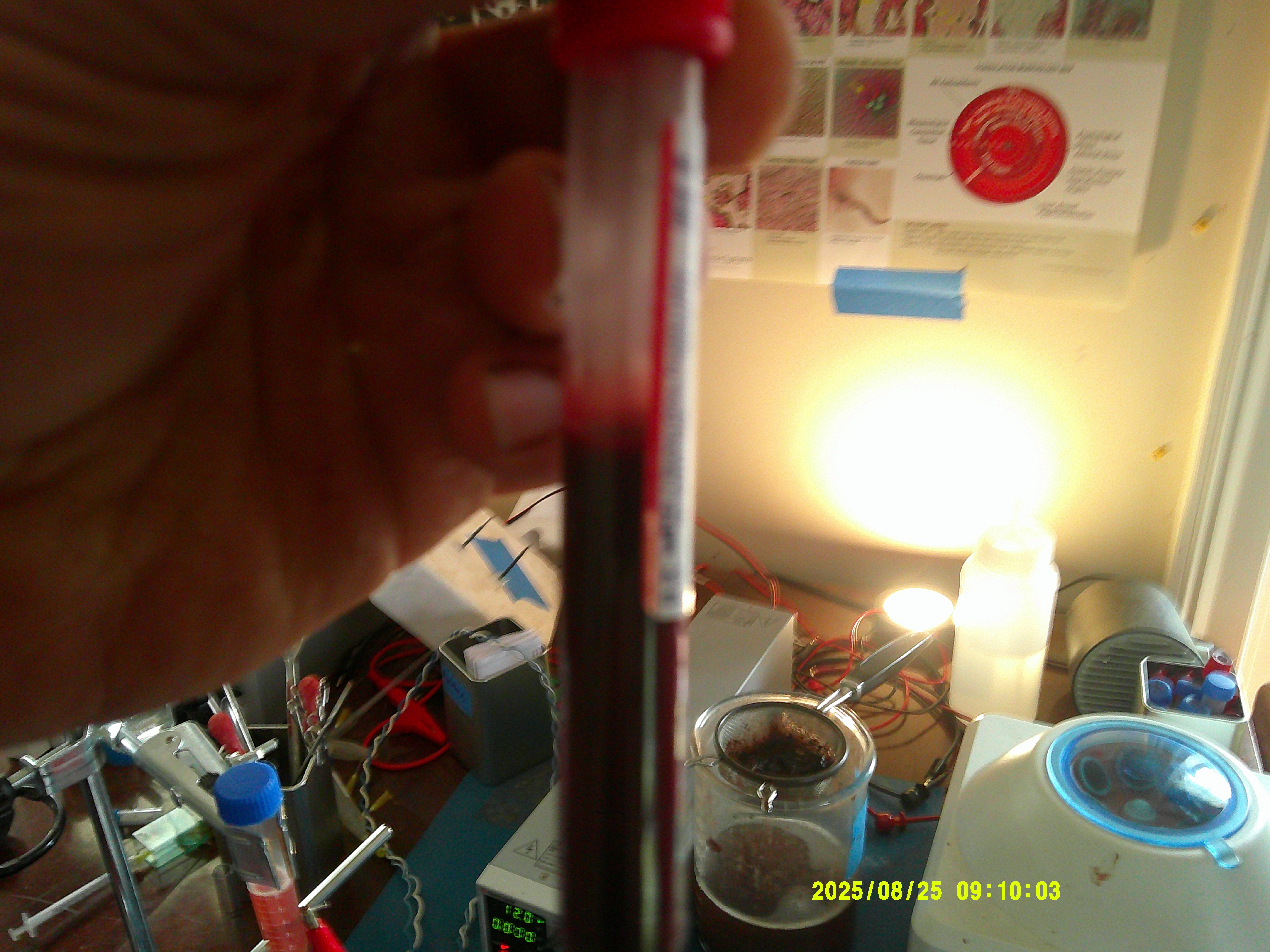
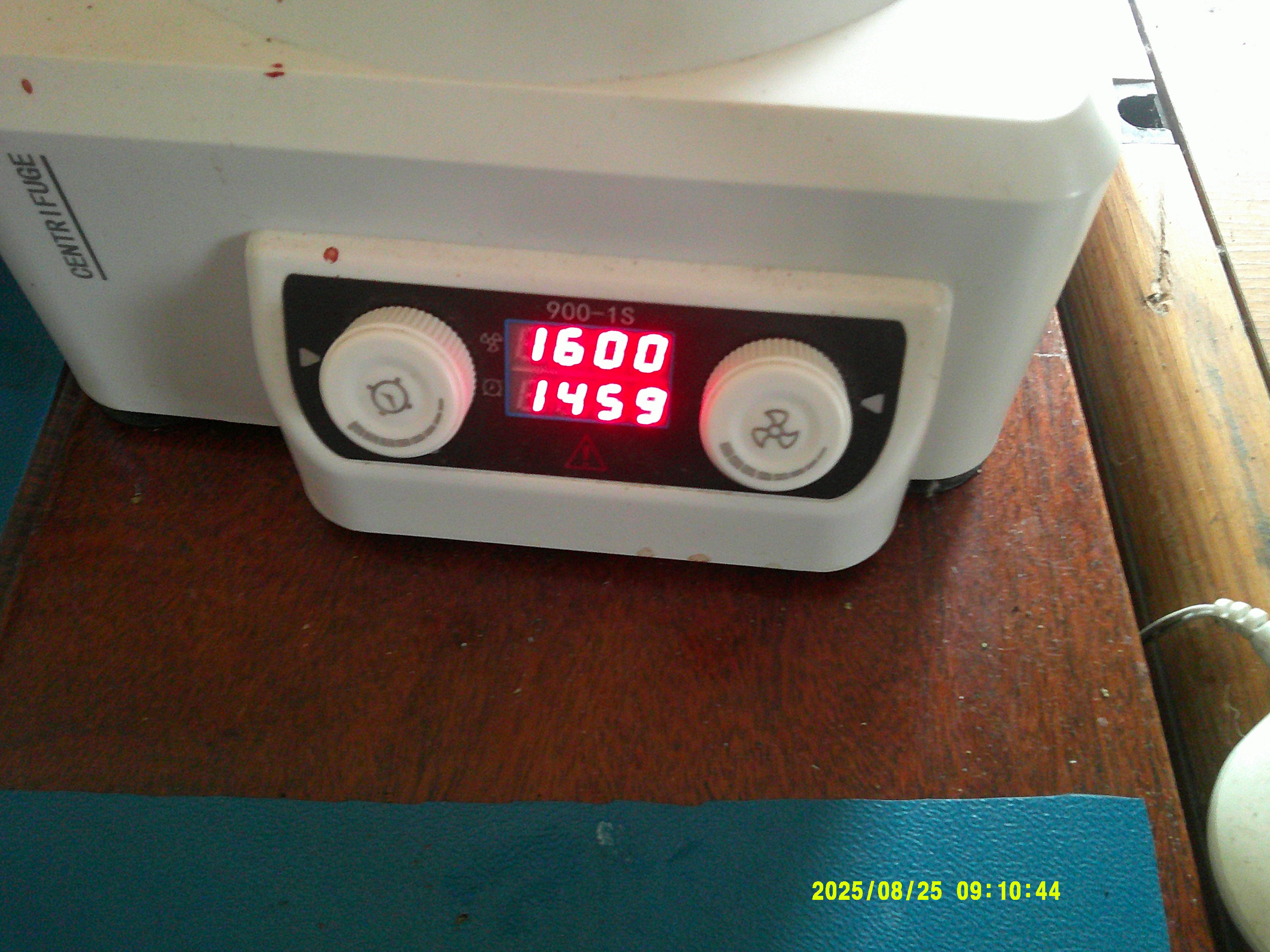
First Centrifuge (1600 for 15 minutes)
The blood is immediately (not allowed time to coagulate) centrifuged at 1600rpm for 15 minutes.
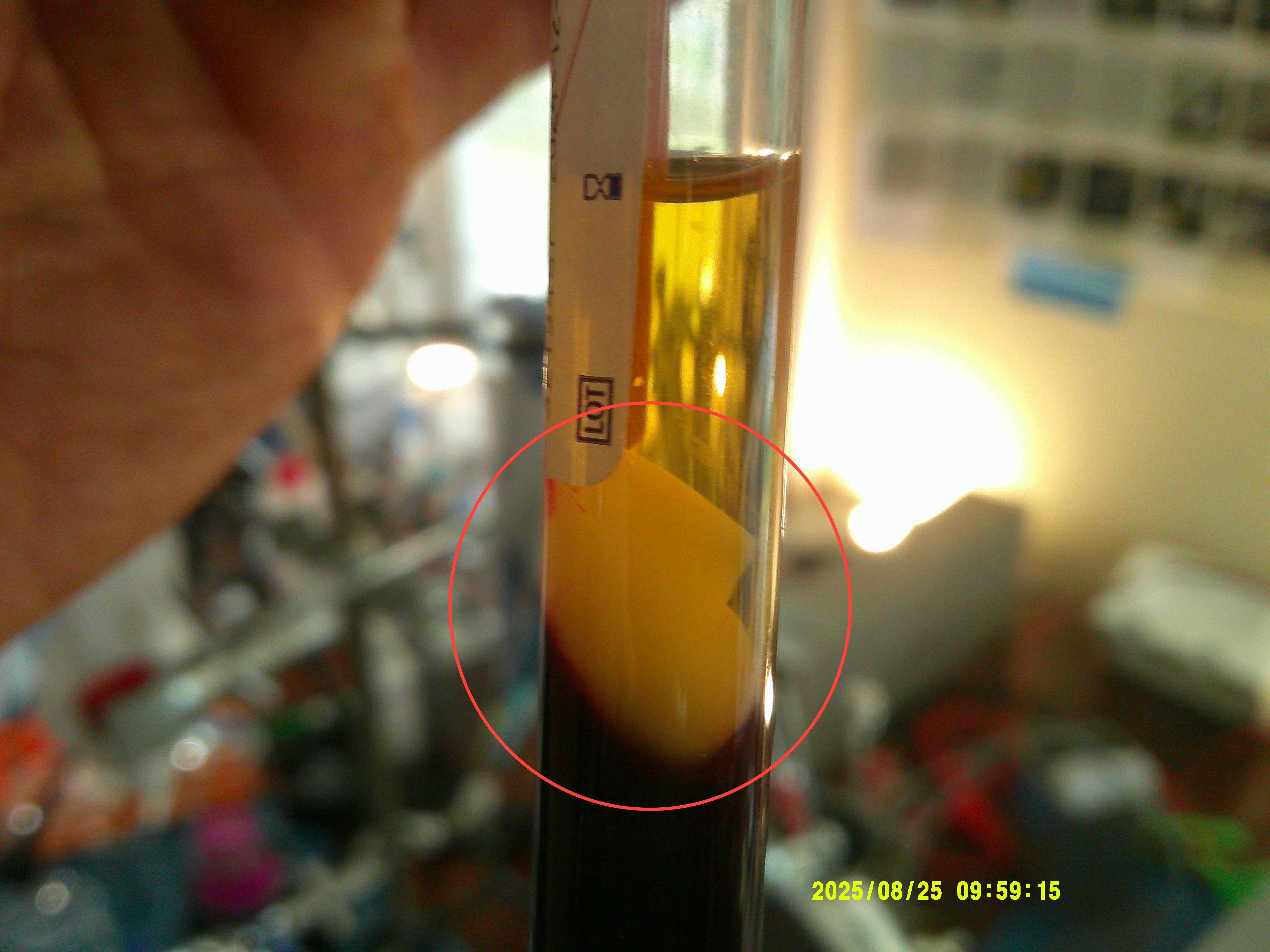
As far as I understand, this technique (draw and immediate centrifuge) is used in the medical field to extract platelet rich fibrin (PRF). This material is the cloudy looking area above the blood clot (somewhat difficult to see in these pictures; two vials shown). I believe PRF is a normally occurring hydrogel that is produced by the body. The nature of the APM is distinctly different from PRF.
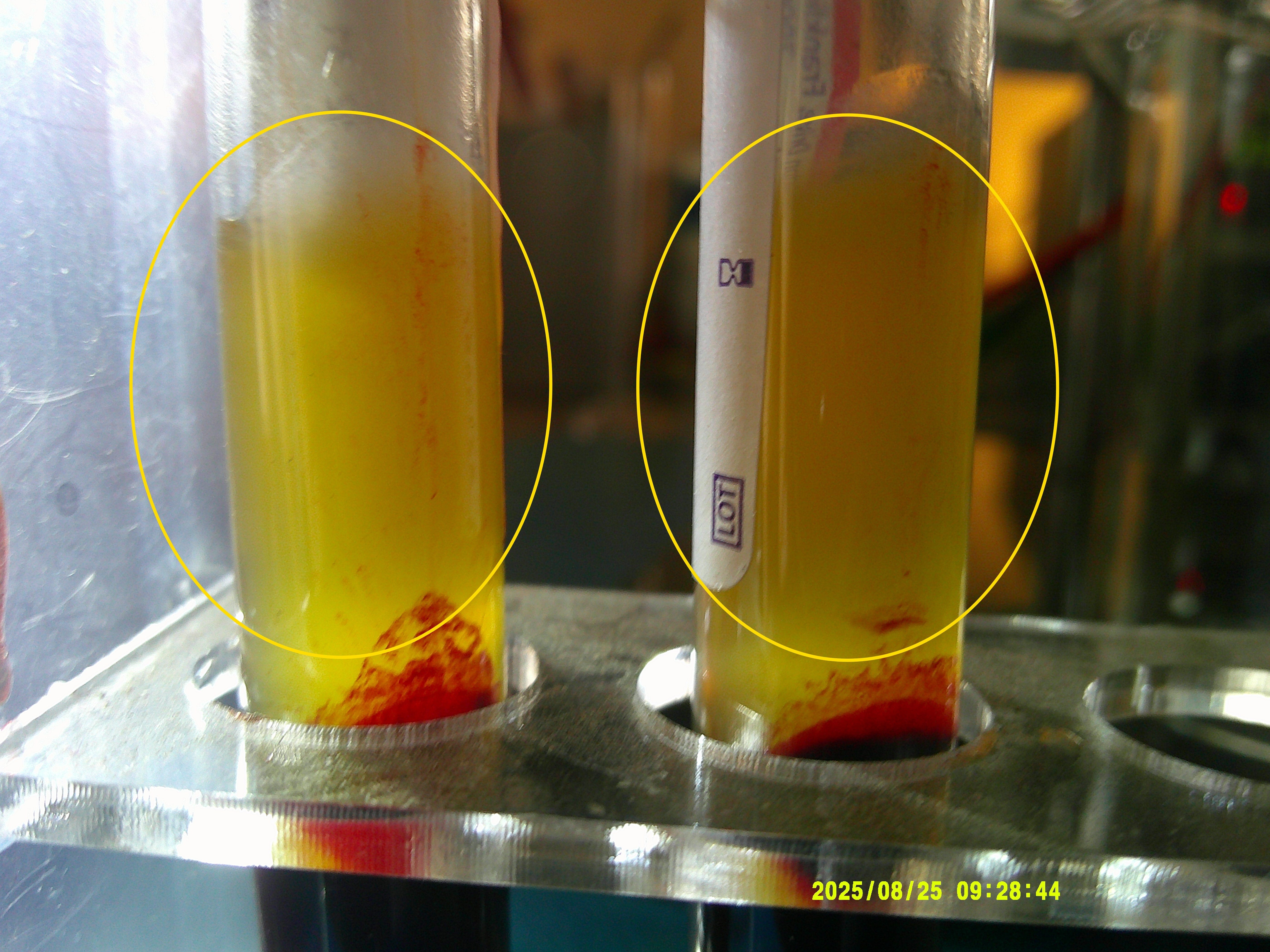
At this stage, the APM can possibly be partially seen directly above the packed blood.
Rest Period (15 minutes undisturbed)
The vial is then allowed to sit undisturbed for another 15 minutes.
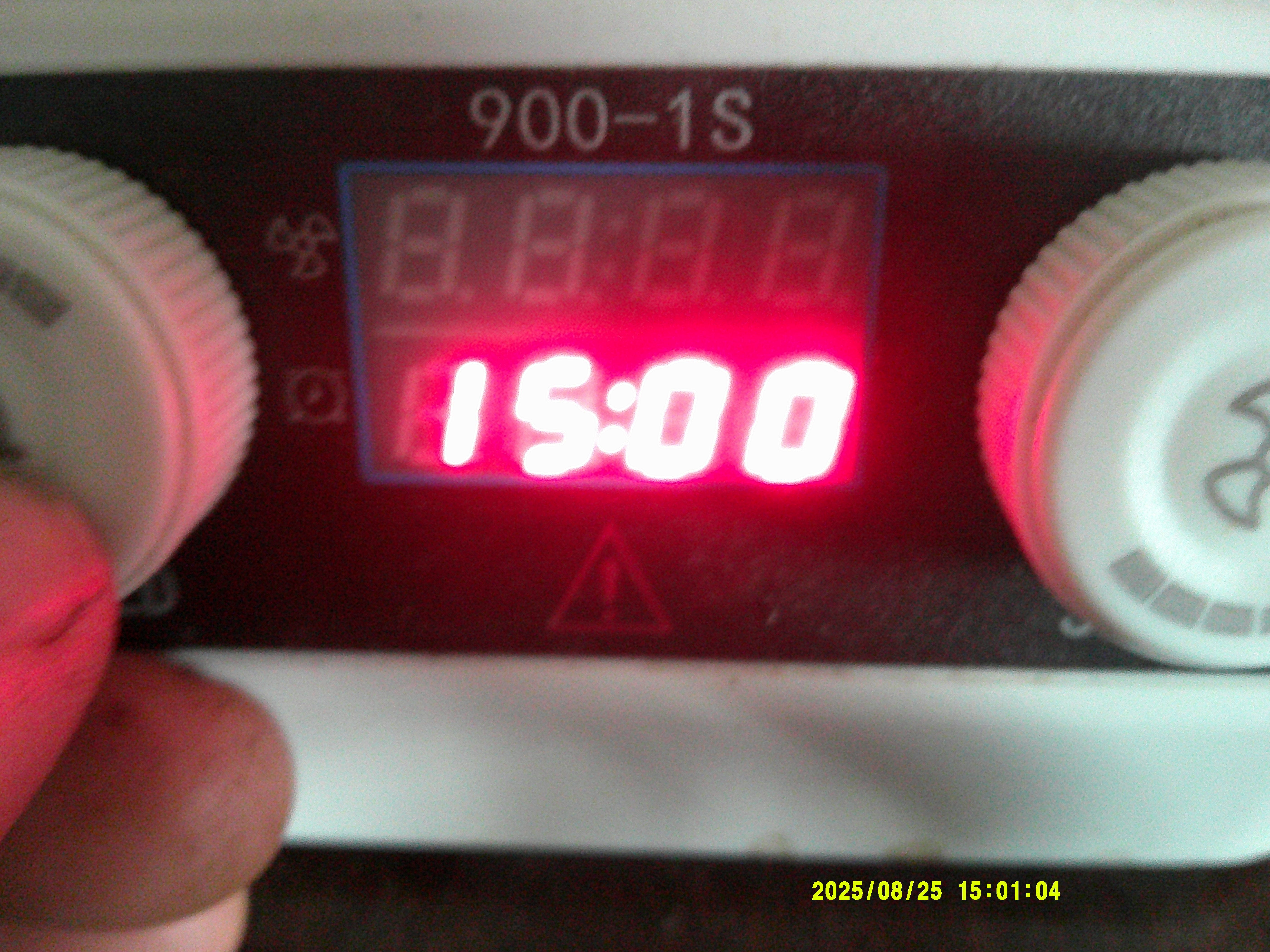
Second Centrifuge (2200rpm for 15 minutes)
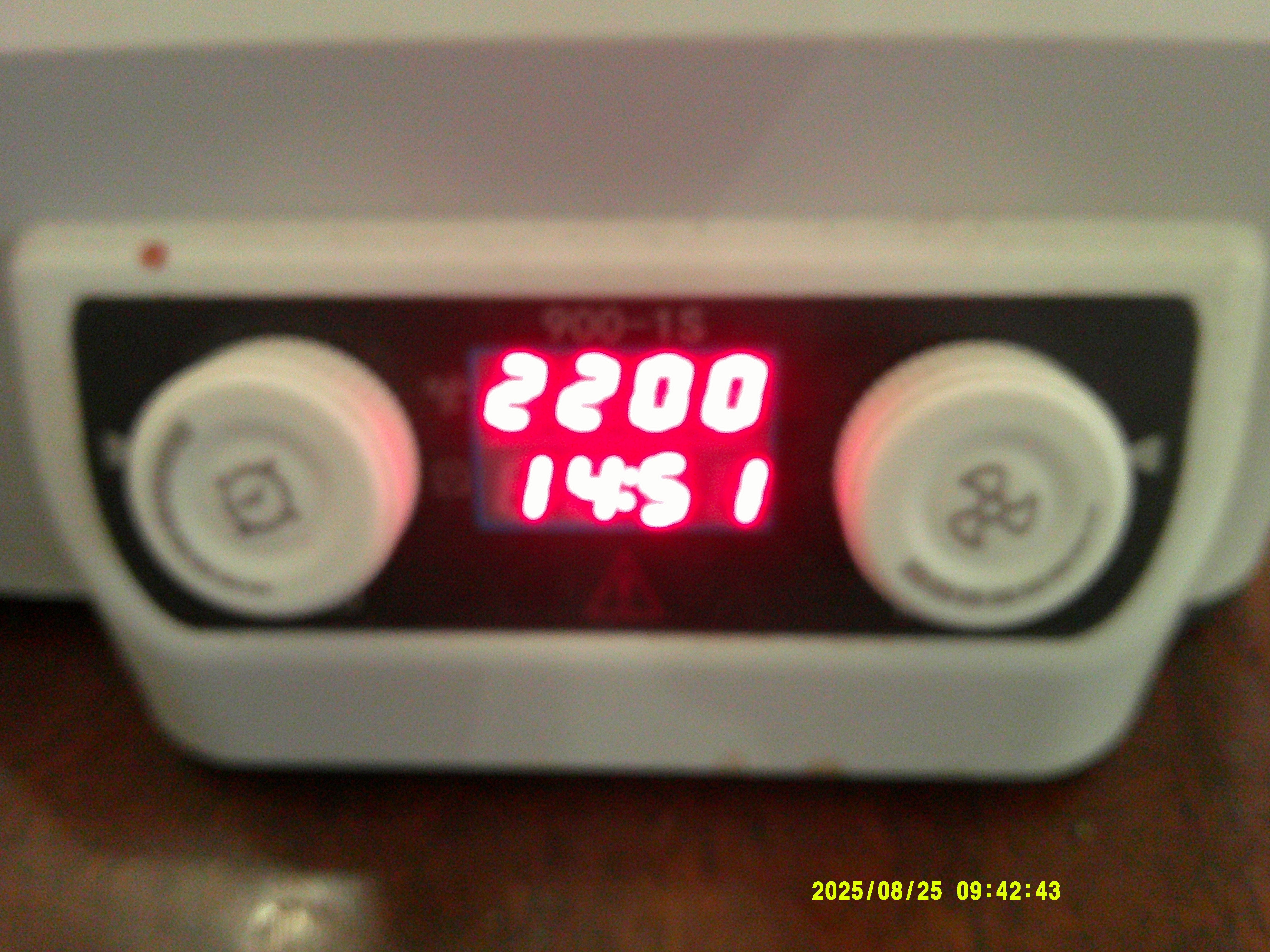
After 15 minutes has elapsed, the vials are then centrifuged again at 2200rpm for 15 minutes.
The final result will be the following:
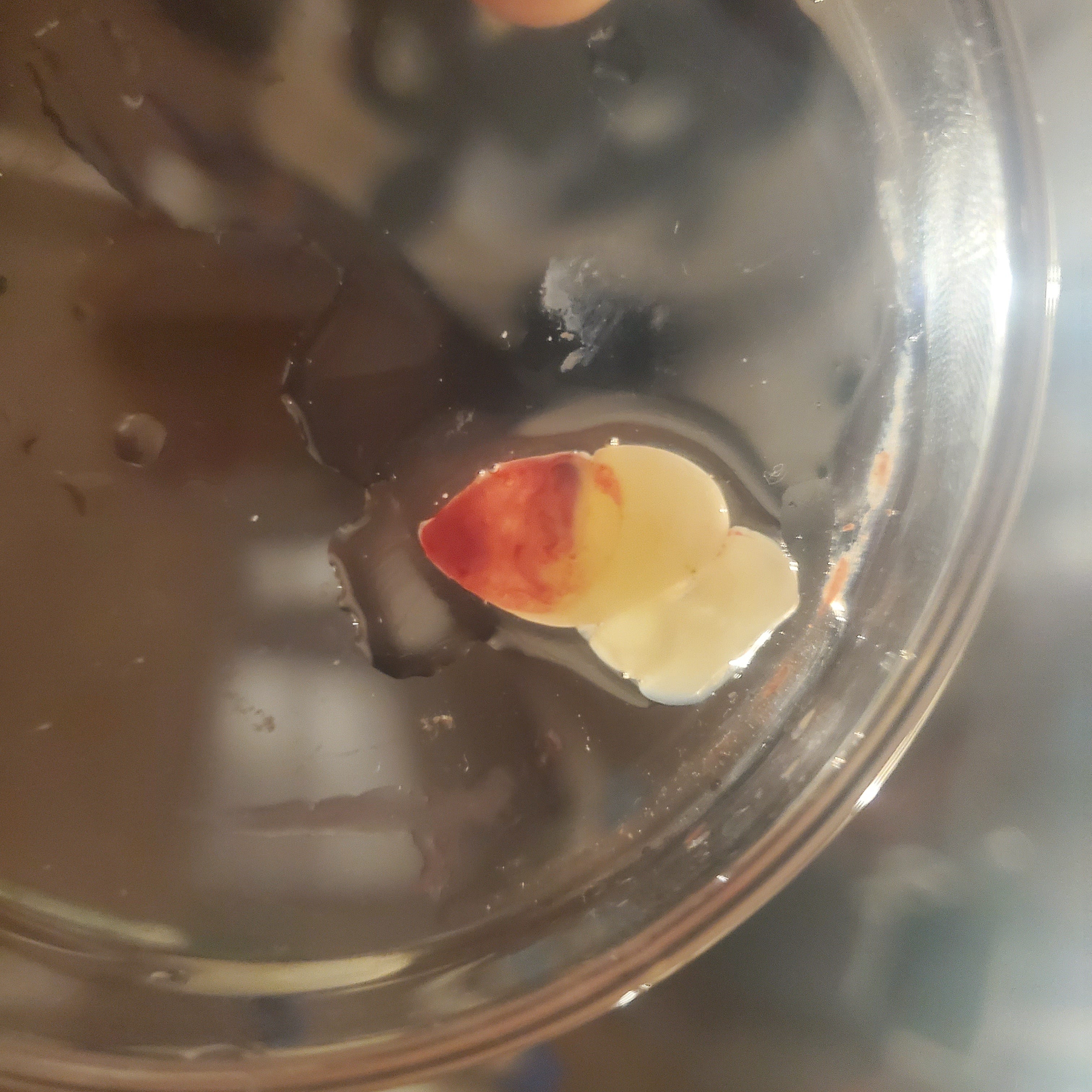
I have performed some basic dissolution/solubility experiments on this material, which I hope to share in a future post.
For now, we will focus on microscopy of the APM.
Microscopy
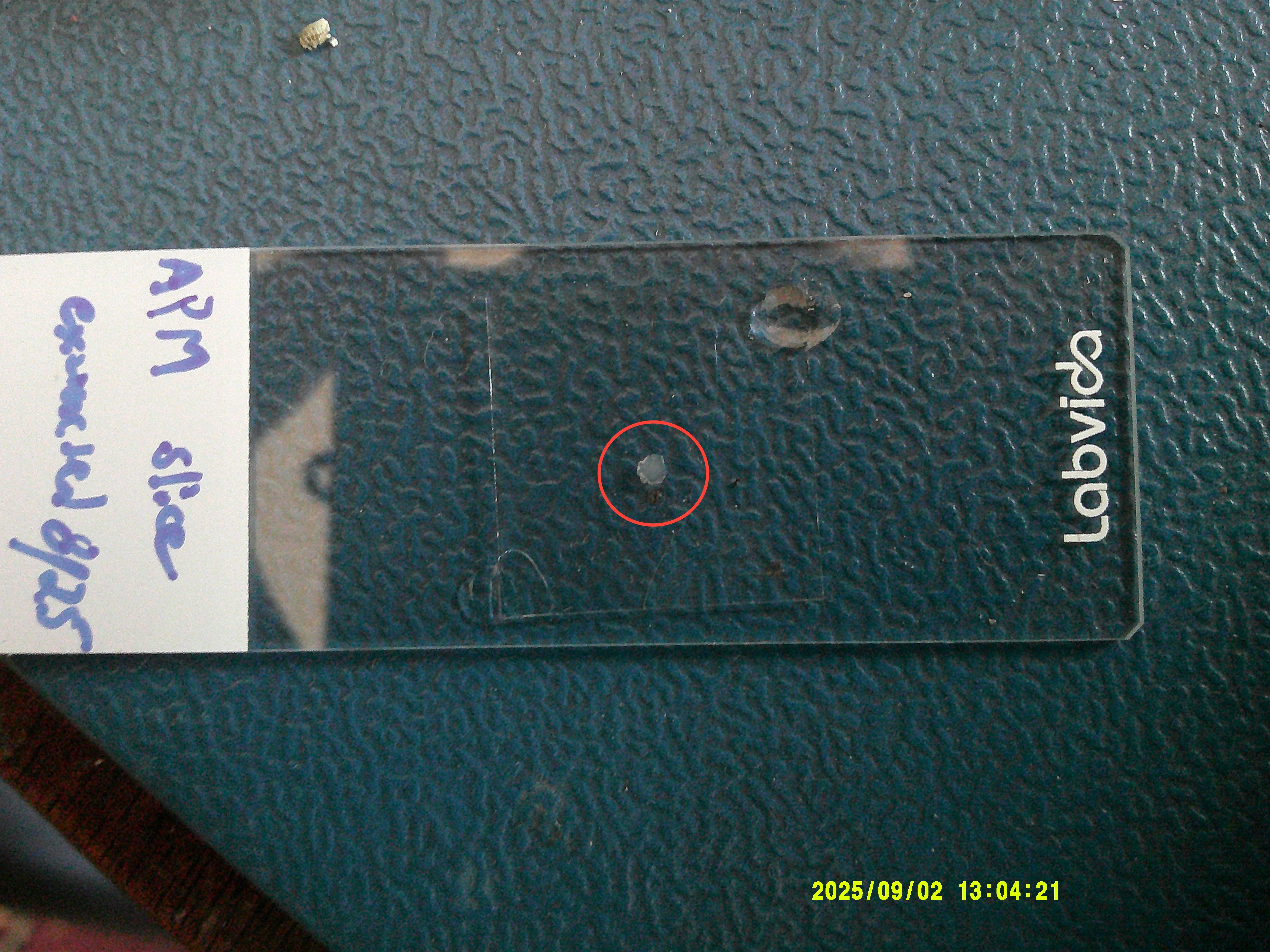
An APM was extracted and had visible blood mechanically removed, then repeatedly washed in alternating distilled water and 99% isopropanol. A final washing in water, and then a small slice was dissected off the primary mass.
Slide prepared as in following image:
Micrographs are as follows. Objectives used are 4x/10x/20x/40x/100x. All images in brightfield.
Note highly filamentous nature. Individual comments will be under each image.
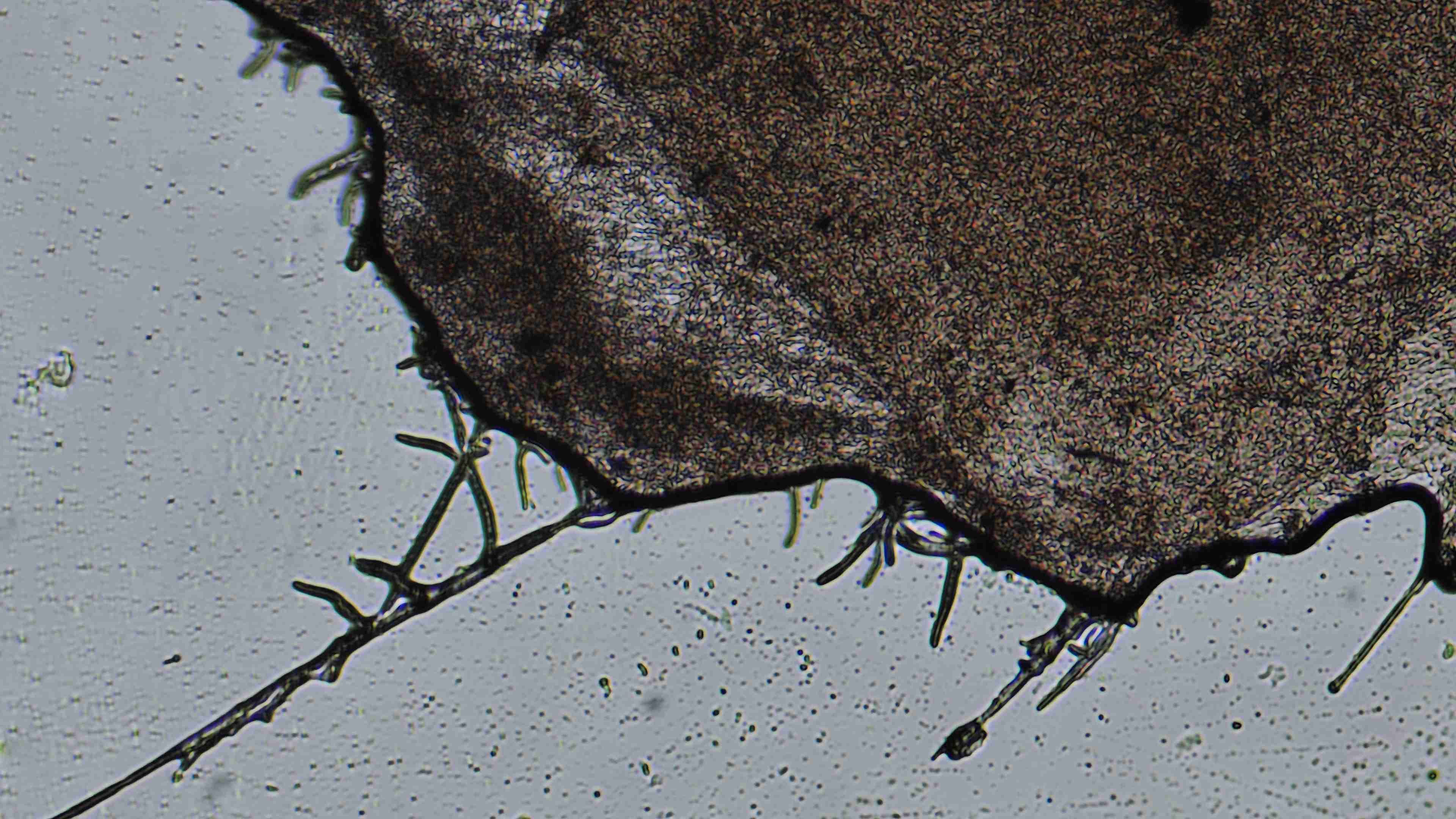


We now increase magnification.
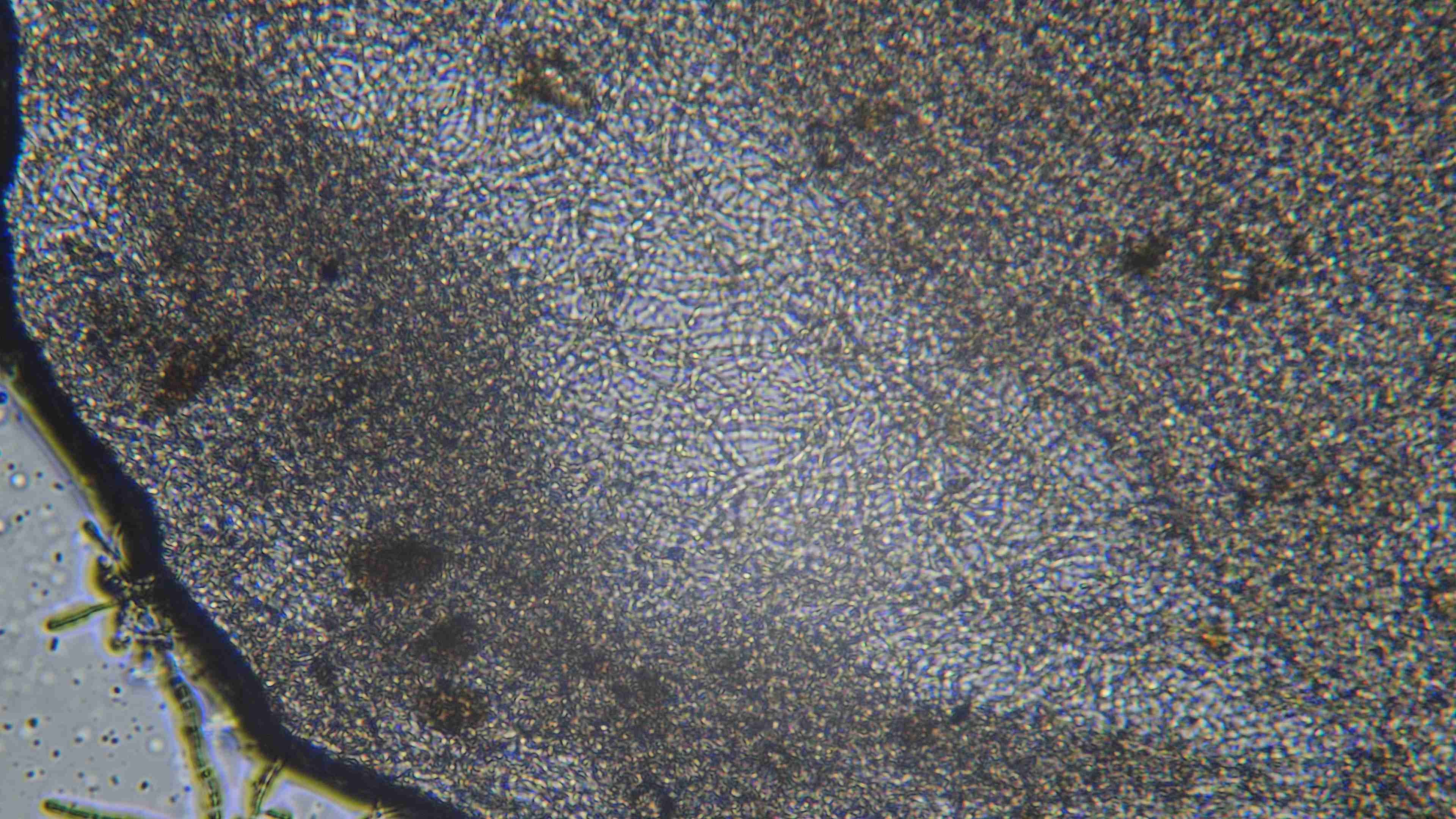
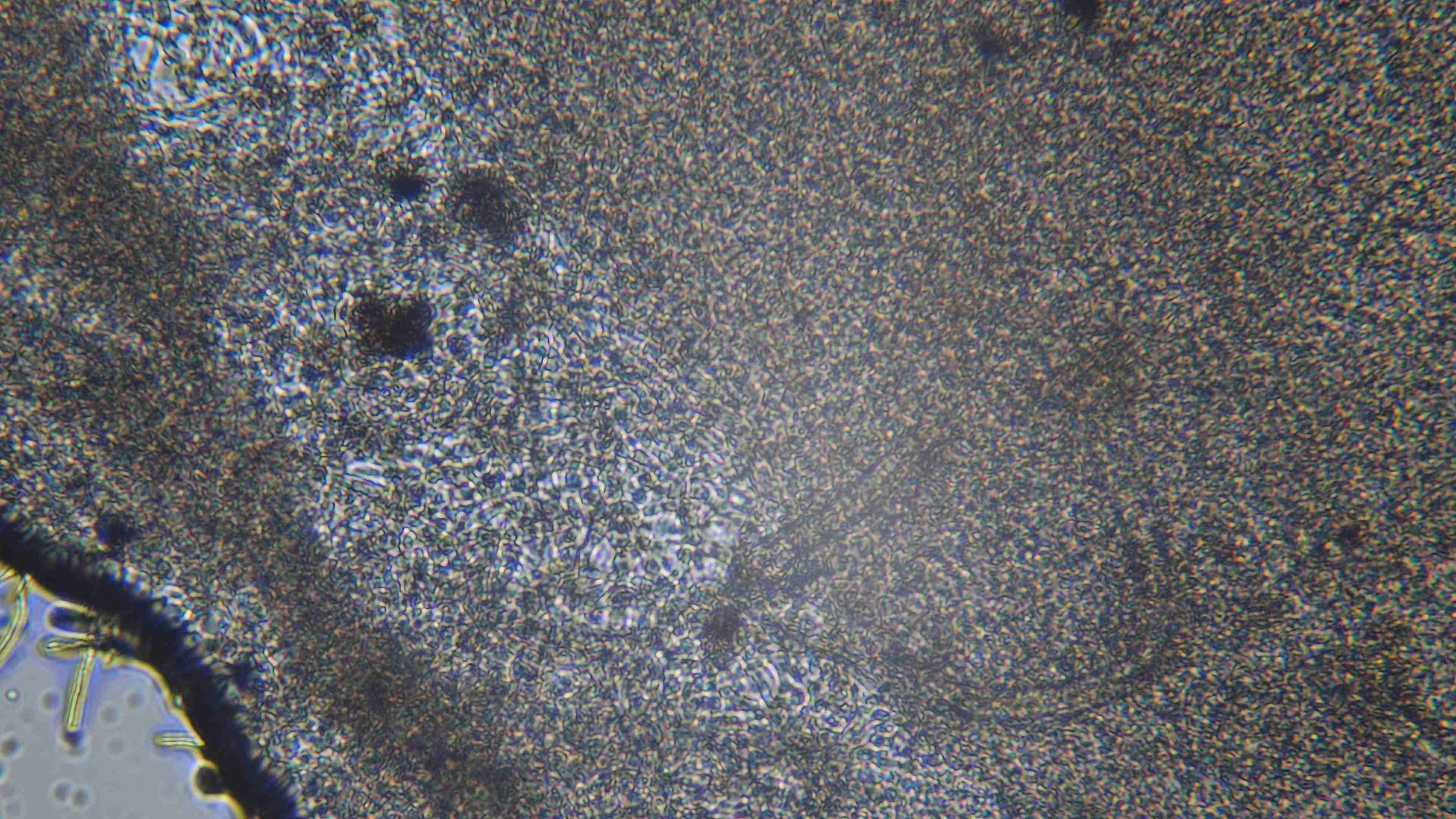
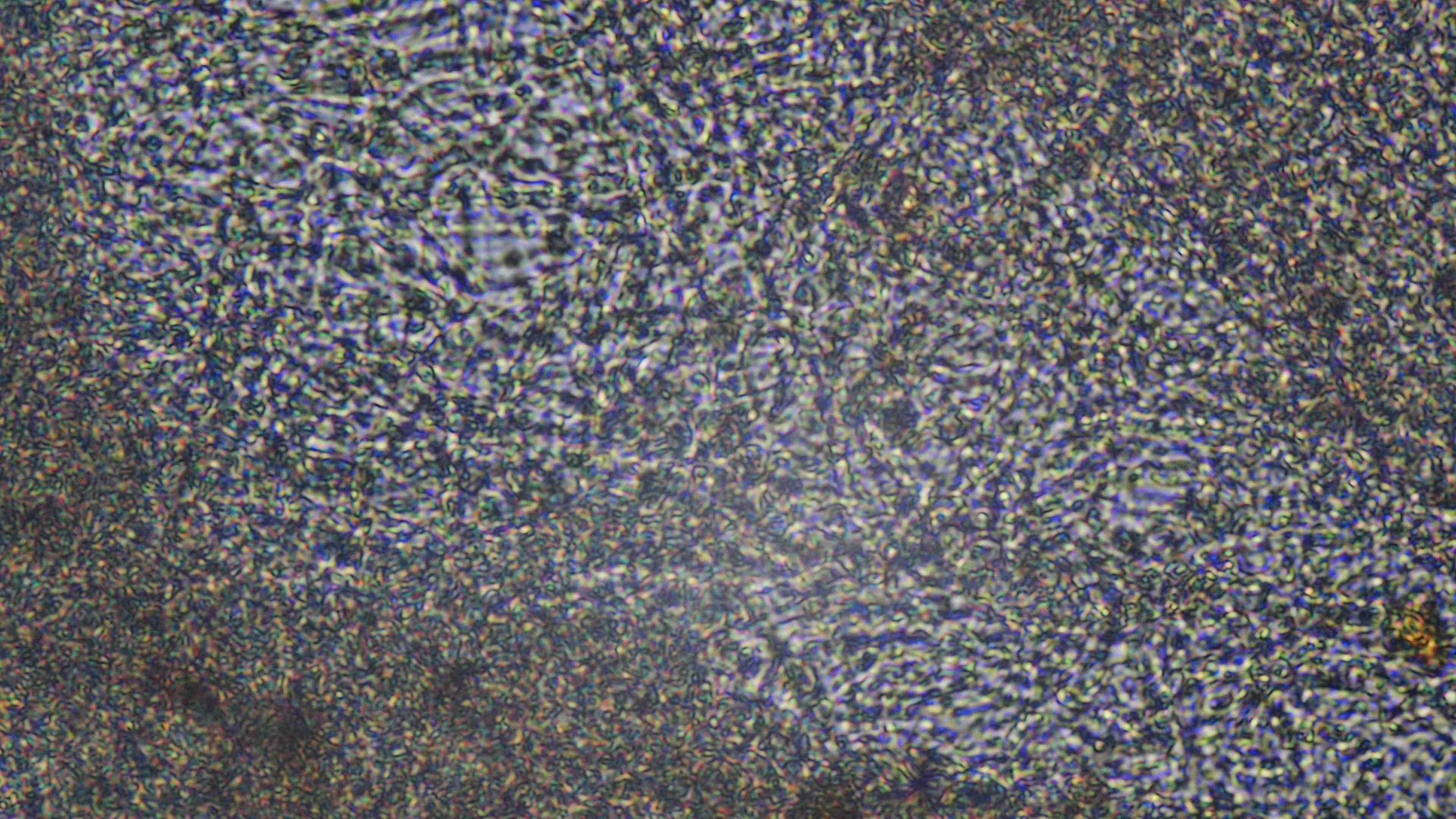
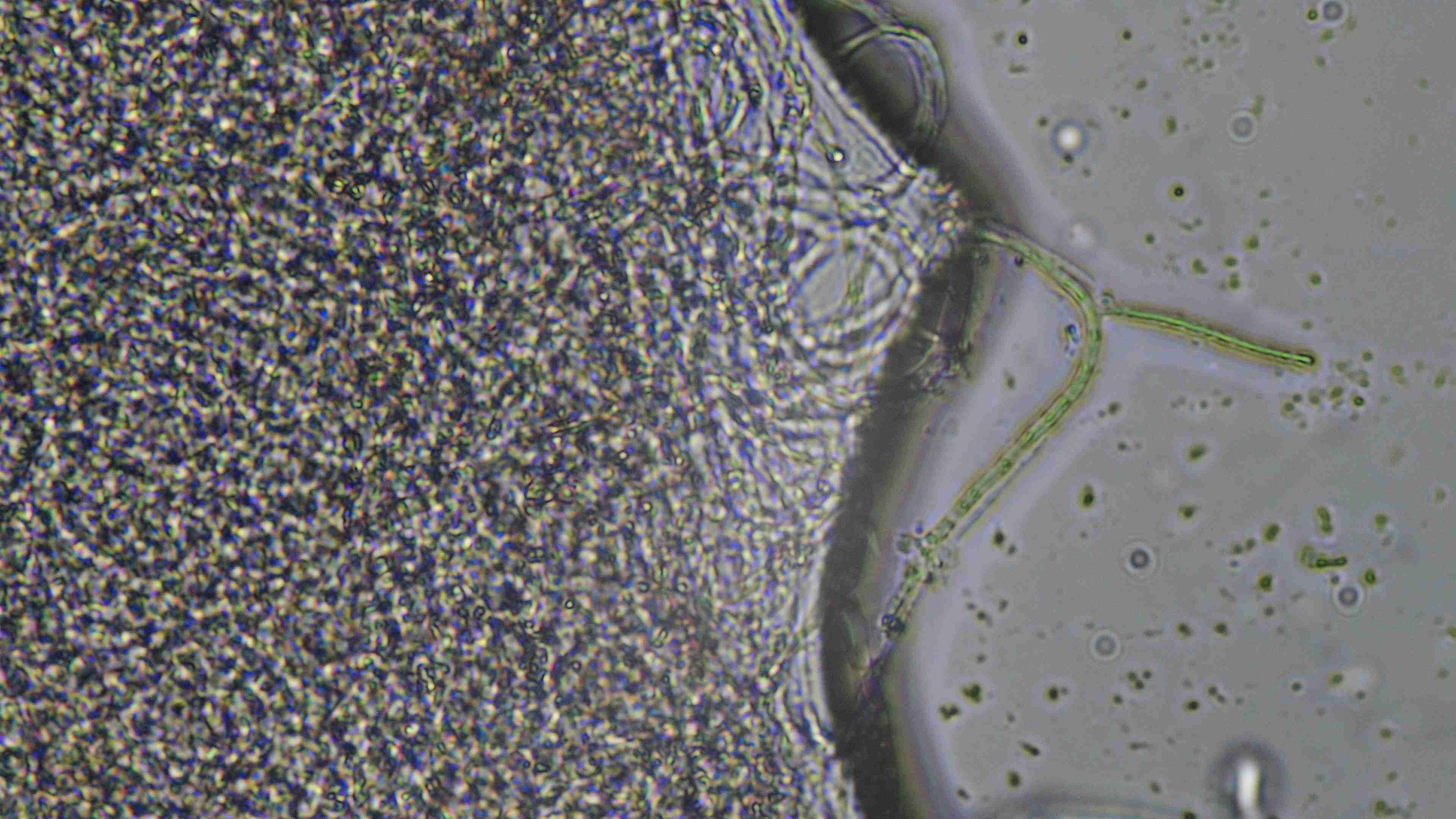
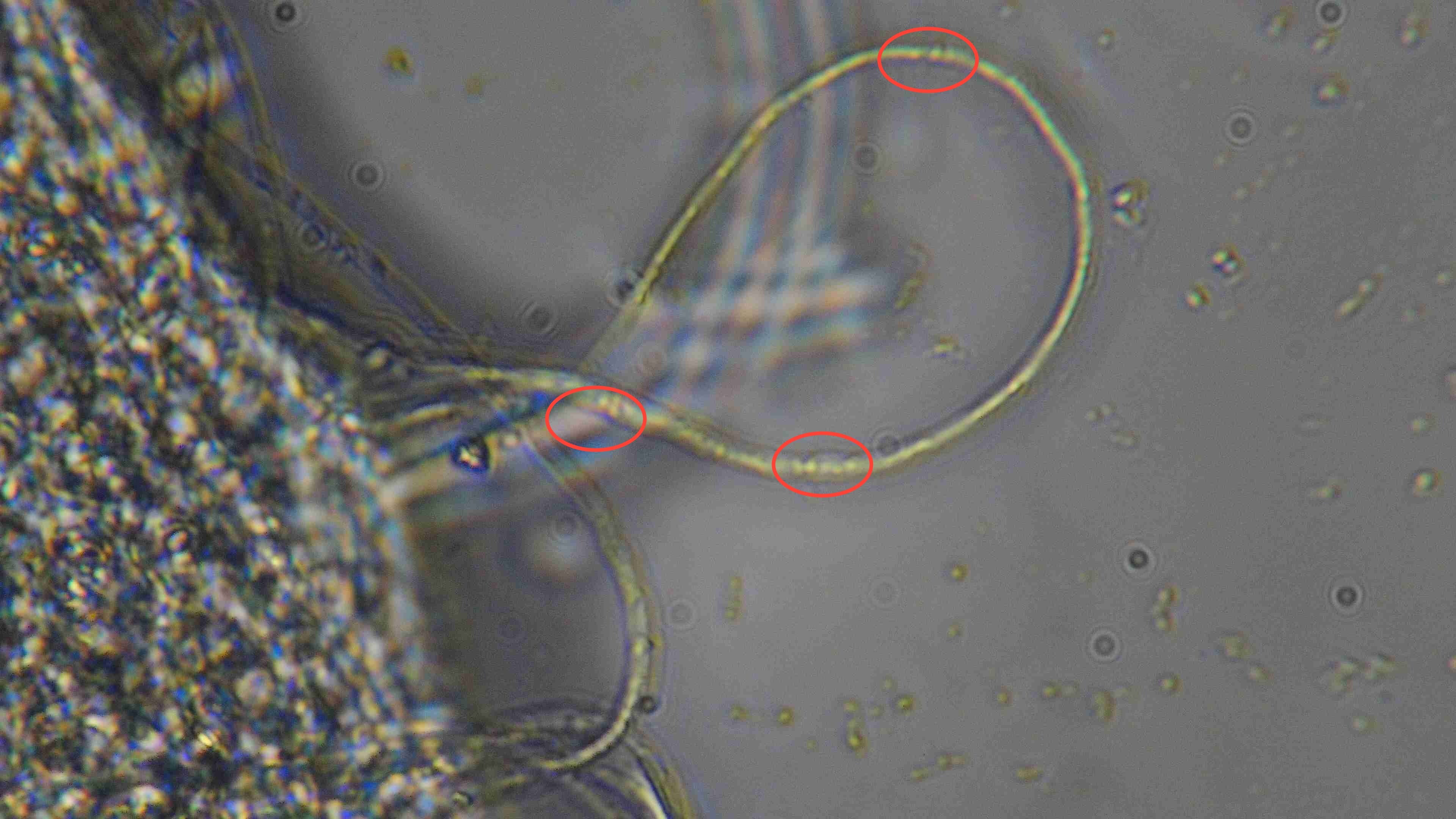
Higher magnification, complex filamentous nature dominates. Small round objects can be seen, and more unusual organized formations also become visible:
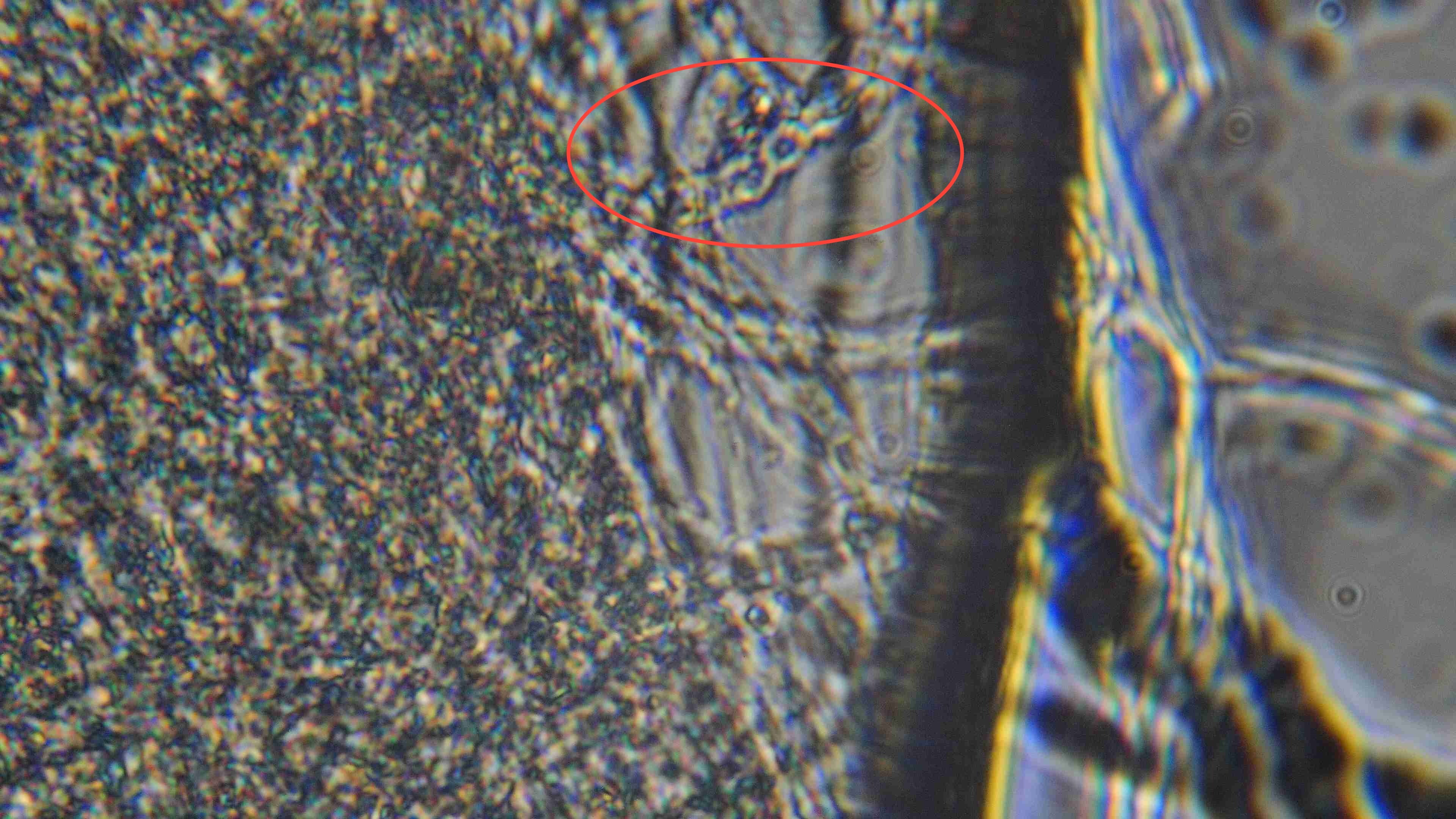
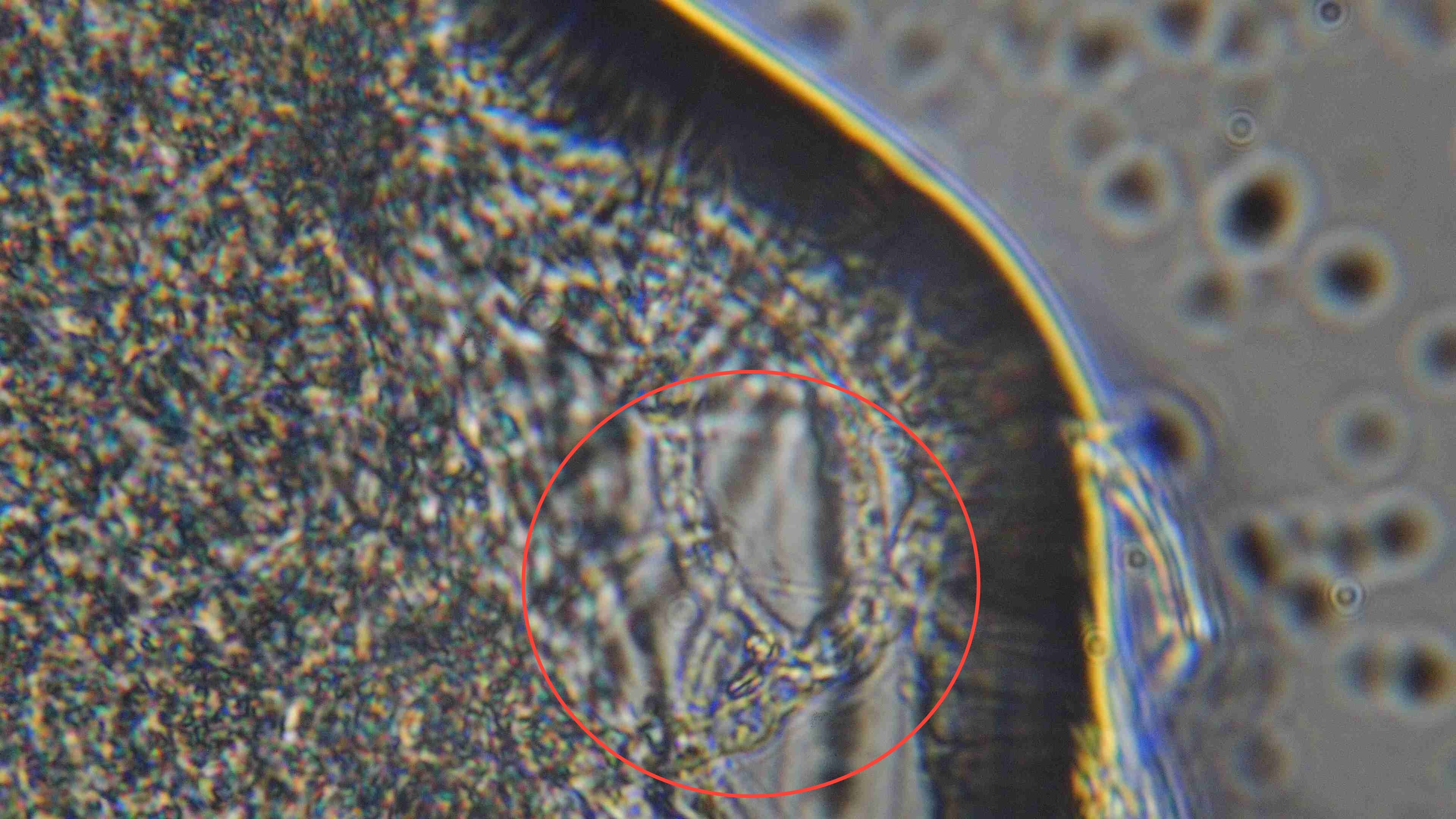
100x objective, no oil used, individual CDBs come into view, match to historical CI research related to ‘Morgellons’ present within human blood.
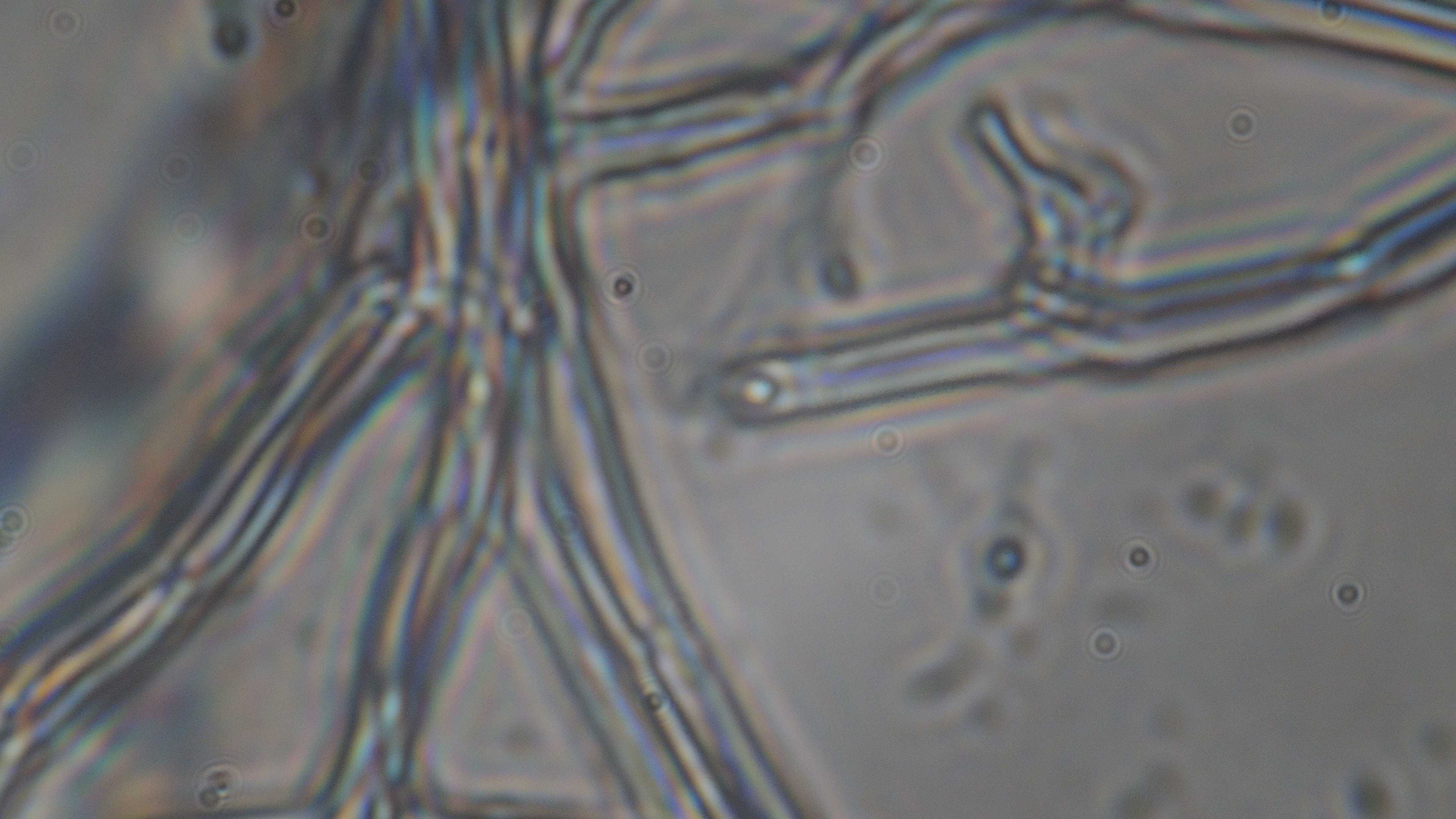
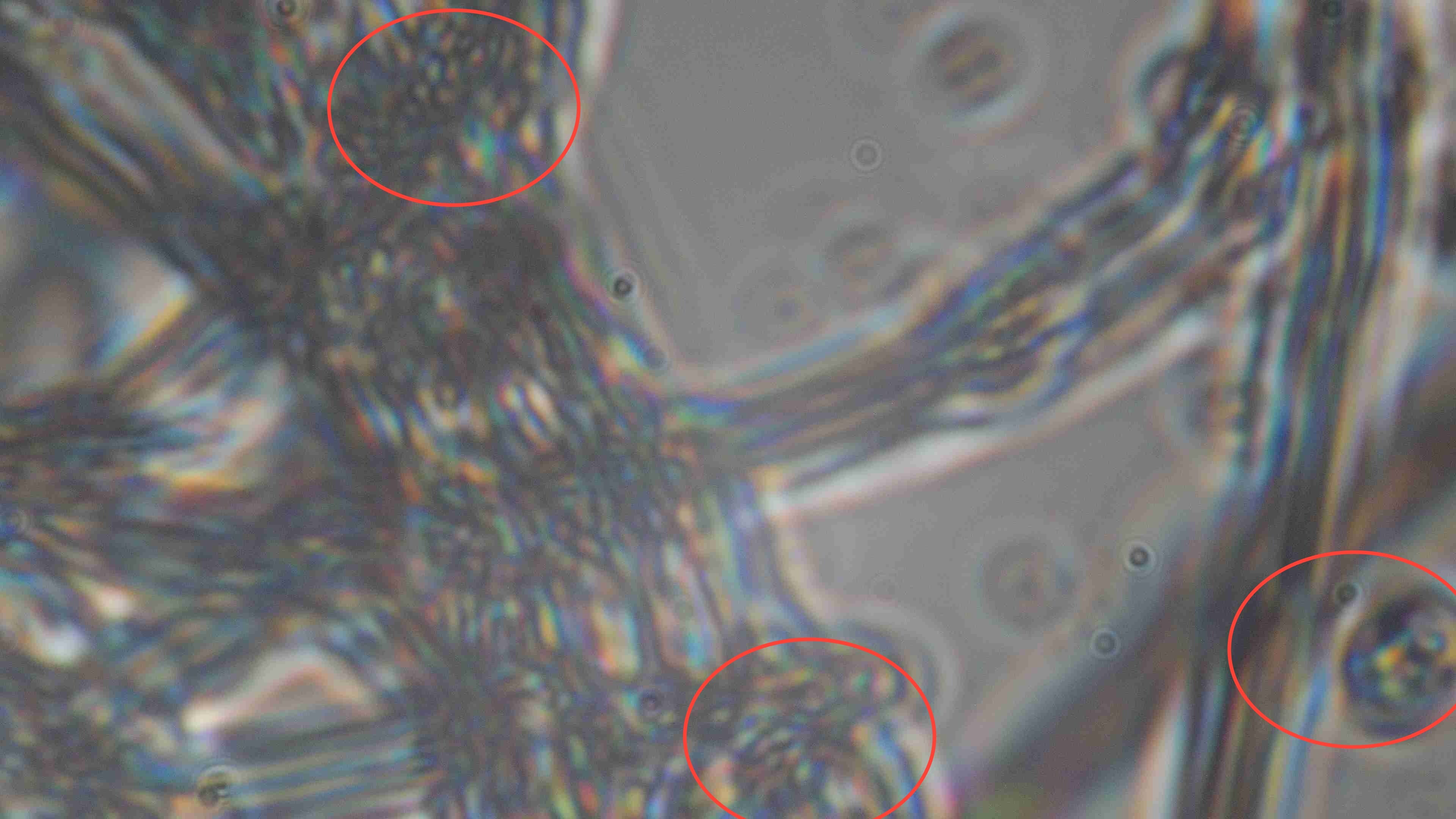
The CDB appears to be highly efficient in absorbing and utilizing energy. CI research has a long history of documenting strong electromagnetic (and other forms of energy) relationships with the CDB.
To finish the article, I will provide relevant CI articles on this subject; these are merely culminations of decades of work.
I reiterate here, and will continue to do so: all relevant research can be found in the CI research archives, at carnicominstitute.org.
https://carnicominstitute.org/maturation-of-a-biopolymer/
https://carnicominstitute.org/pandoras-polymer-synthetic-blood-and-the-cross-domain-bacteria-cdb/
https://carnicominstitute.org/a-cross-domain-bacteria-cdb-production-otherwise-known-as-hydrogel/
https://carnicominstitute.org/human-blood-vs-synthetic-blood-the-path-to-the-blood-clot/
https://carnicominstitute.org/the-polymerization-clotting-of-blood-a-model/
I hope to expand my thoughts on the APM in a later post, and provide more analysis of the material.
Thank you for taking the time to read!
Michael Merrick
Oh Dear God!
Made the mistake of watching this before bedtime.
Will have to take a double dose of CBD.
Apparently nobody is out of the woods.
This is top level, groundbreaking research - to me, a completely novel approach that allows for a clearer perspective and far better understanding of what the psychopaths are trying to achieve.
Thank you for brilliant and amazing work!
Great work!
ELM engineered living materials is the science field that created this.
"polymer inclusion clots" are mentioned in new materials science and ELM papers.
i have a lot of papers I cite in my notes related to this field.
Cheers
https://open.substack.com/pub/neomicroscopy/p/calamari-clot-biopolymer-technologies?r=1yb1yj&utm_campaign=post&utm_medium=web&showWelcomeOnShare=false